Animated GIFs are a 1987 format: 256 colors per frame, one bit of transparency, and timing buried in the file stream where no engine can read it. Convert them to PNG sprite sheets and you get full 8-bit alpha, frame metadata Godot, Unity, and Phaser read directly, and one bound texture for the whole animation instead of one draw call per frame. Anything that runs at runtime in your game should be a sheet.
The Format That Refuses to Die
GIF turns 39 this year. CompuServe designed it in 1987 to move low-color images over 2400-baud modems, and it does exactly what that job needed: 256 colors per frame, and transparency as a single flag per pixel, either fully visible or fully invisible.
Indie devs still reach for it because every pixel art tool exports to it and every browser plays it. That convenience is real, and it is the only argument left in GIF's favor once the file reaches a game engine.
Why GIFs Are Wrong for Games
The 256-Color Ceiling
Every pixel in a GIF is an index into a color table of at most 256 entries. For 16-bit-style pixel art that is plenty. For gradients, soft shadows, or particle effects it runs out fast.
GIF's workaround is dithering: scattering alternating pixels to fake colors outside the palette. It looks fuzzy up close, and it works against LZW compression by breaking up the runs of identical pixels the encoder depends on. You pay in file size for the illusion.
Transparency Is One Bit
PNG carries 8-bit alpha: 256 gradations of opacity per pixel. That is what soft shadows, glowing edges, and anti-aliased silhouettes are made of.
GIF gives you one flag per pixel, transparent or not. Fake a soft edge anyway and you get the GIF halo, a hard fringe of the old background baked into the sprite. It hides on the background it was authored against and appears the moment the sprite sits on a different one.
No Metadata Your Engine Can Read
An engine needs the frame count, the frame size, how long each frame plays, and usually a pivot and a trim offset.
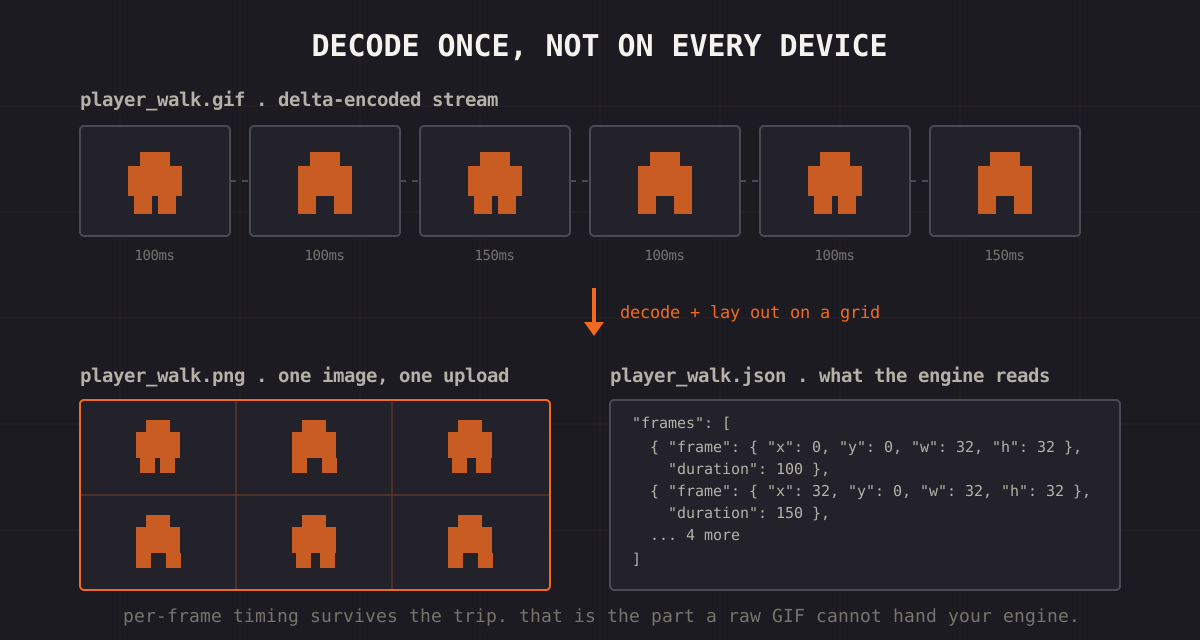
GIF has some of that. Frame timing and size are in the file, but encoded in the GIF stream rather than in anything an engine reads. So you either decode the GIF at runtime on every device that runs your game, or you extract the frames once, offline, into a format the engine already understands. Converting to a sprite sheet is the second one.
One Texture Per Frame
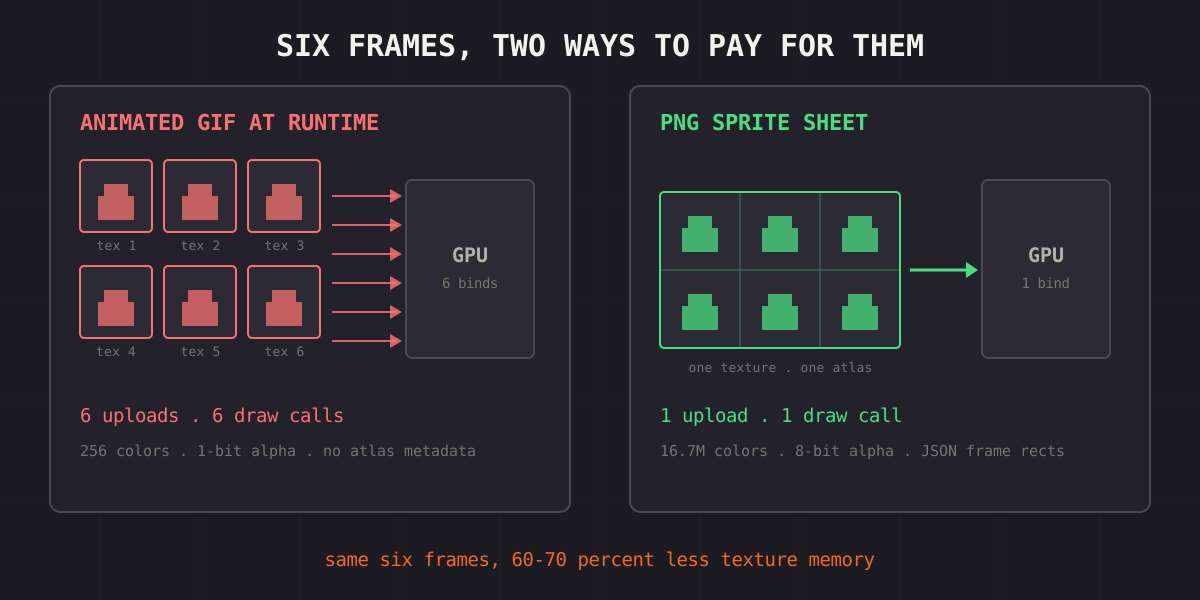
Play a GIF in a game and the engine either decodes and uploads each frame to the GPU as it plays, or decodes the whole thing at load and holds every frame as its own texture. Either way, an eight-frame animation is eight textures.
That is the cost that matters, and it is structural rather than a percentage. Changing the bound texture between draws breaks batching, so eight textures means the renderer cannot merge those sprites into one draw call and the same eight frames on one sheet means it can. How much you save depends entirely on how many animated sprites are on screen at once, so measure it in your own project instead of trusting a number from someone else's.
What a Sprite Sheet Gives You Instead
Side by side, on the things an engine actually cares about:
| Capability | GIF | PNG Sprite Sheet |
|---|---|---|
| Color depth | 256 | 16.7 million |
| Alpha transparency | 1-bit | 8-bit (256 levels) |
| Per-frame metadata (JSON/XML) | No | Yes |
| Atlas packing (multiple anims) | No | Yes |
| Lossless compression | Yes | Yes |
| Engine-native loading | No | Yes |
| Dithering artifacts | Yes | None |
| Draw calls per animation | N | 1 |
The Migration Workflow
Converting GIFs to sprite sheets should take about thirty seconds.
Step 1: Gather Your GIFs
Pull together every animated GIF you plan to use: character animations, effect loops, UI spinners, whatever. Organize them by animation name: player_idle.gif, player_walk.gif, fireball.gif, and so on.
Step 2: Convert Each GIF
Drop the GIF onto the editor and the importer opens with every frame already pulled out of the stream, ready to preview before anything is committed.
A conversion worth doing should:
- Decode every frame of the GIF
- Preserve each frame's timing metadata
- Lay frames out in a grid (usually a single row, but multi-row for very long animations)
- Export a single PNG with proper padding between frames
- Optionally export JSON/XML metadata for your target engine
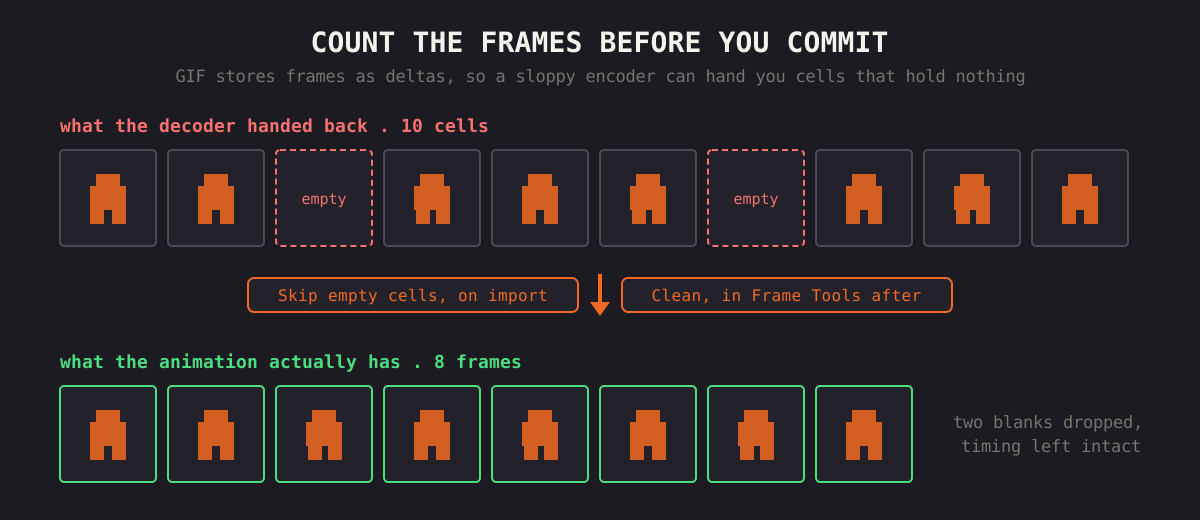
Check the frame count in the importer against what the GIF should have. GIFs encode frames as deltas against the previous one, and a badly written encoder can leave you with duplicate or blank frames. Skip empty cells removes the blanks, and the Clean button in Frame Tools drops empty frames after import.
Palette-to-truecolor conversion is lossless, so the colors come across exactly. If the GIF was dithered, the PNG inherits the dither pattern, and now you have 16.7 million colors available to clean it up with.
Step 3: Reclaim Alpha
Your extracted frames now have full alpha available. A hard-edged GIF silhouette stays hard-edged in the PNG, but you can open it in Aseprite and add the soft glows, feathered edges, and drop shadows the GIF could never hold.
This step is optional. It is also the cheapest quality upgrade available to an archive of old GIFs, since it costs no re-animation.
Step 4: Import Into Your Engine
Sprite sheets work natively in every major engine:
- Godot: Drop the PNG and JSON into your project, create an
AnimatedSprite2DwithSpriteFramespointing at the sheet, match the timing from the JSON. - Unity: Set the import mode to "Multiple," use the Sprite Editor to slice by grid (or by atlas metadata), build an Animation Controller.
- Phaser / PixiJS: Load the atlas with
this.load.atlas('player', 'sheet.png', 'sheet.json'), reference frames by name. - Construct, GameMaker, Defold: All have native sprite sheet importers: feed them the PNG and the metadata.
The hidden win: once you move your animations to sprite sheets, you unlock the engine features that depend on them: per-frame events, frame tagging, animation blending, runtime palette swapping. None of that works with raw GIFs.
When to Keep a GIF (and When to Convert)
GIF is still the right tool for a narrow set of jobs:
Keep as GIF:
- Marketing material (Twitter/X previews, Steam page animated screenshots)
- Documentation examples (tutorial screenshots, bug reports)
- Quick preview shares with playtesters
- Embedded in Notion, Slack, or Discord where autoplay matters
Convert to sprite sheet:
- Anything going into your actual game
- Anything shipped in a build
- Any animation that needs to composite cleanly with varying backgrounds
- Any animation longer than a few frames where performance matters
The simple rule: if it runs at runtime in your game, it should be a sprite sheet.
The Size Question: Is PNG Really Smaller?
People assume a GIF must be smaller because it is "compressed for animation". For pixel art it often is not, and the reason is in how each format sees the frames.
GIF compresses frames one at a time with LZW and carries palette and control blocks along the way. PNG compresses the whole sheet as a single image with Deflate plus row filtering, so an outline, a background, or any pixel run that repeats across frames is deduplicated once for the entire animation. The more frames there are, the further that goes. Dithering tilts it further, because it breaks exactly the runs LZW needs.
Do not take either side on faith. Export the same frames both ways and compare the byte count on your own art.
Shipping for web? The WebP button in the Export panel writes a lossless WebP of the same sheet, usually smaller again. Godot reads WebP directly and Unity needs a package for it, so check your target before you commit to it.
Going the Other Way
Sometimes you do want a GIF back out: a devlog post, an itch.io page, a Discord preview. The GIF export renders the current sheet as a looping animation and asks for the playback rate first.
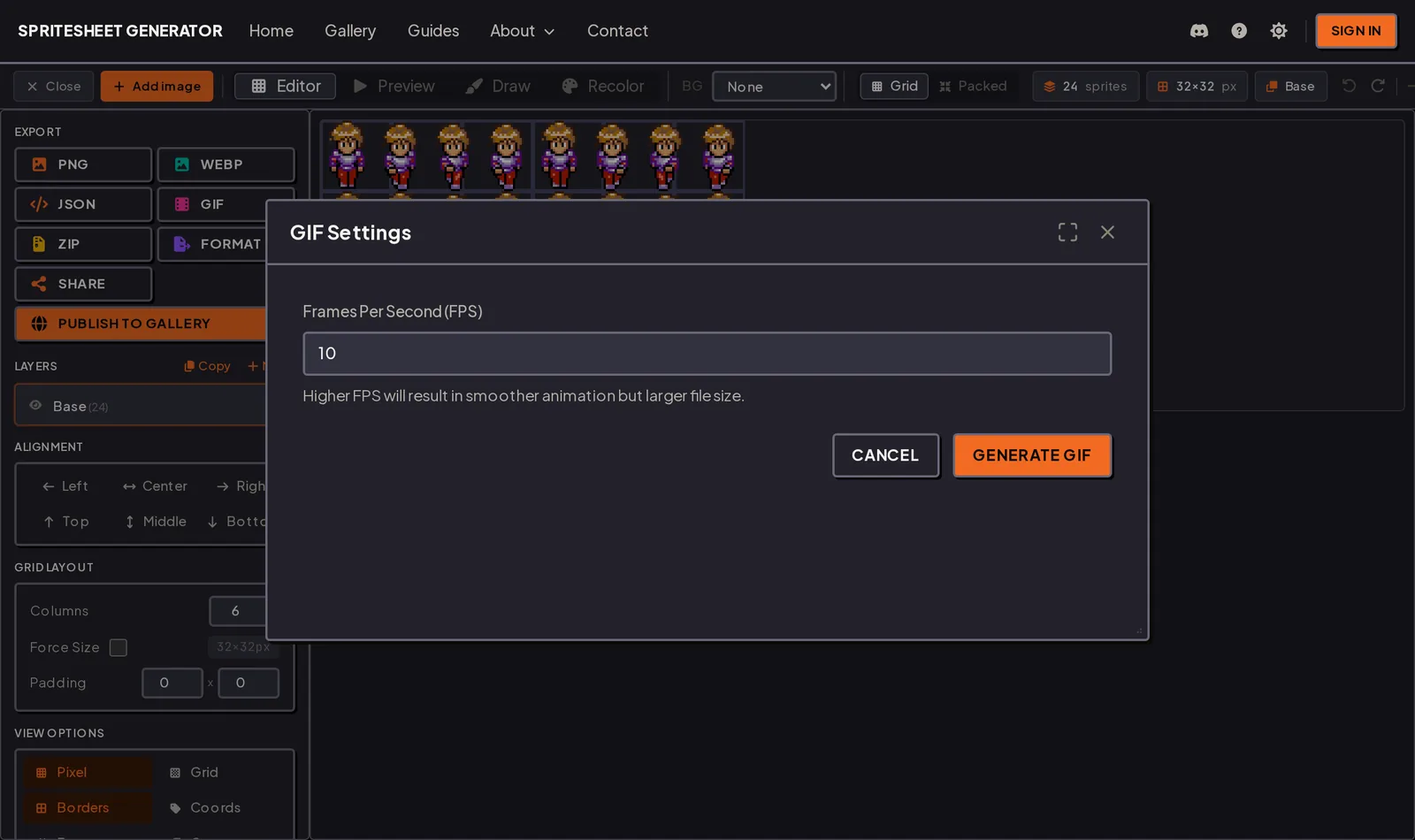
Pick the rate deliberately. Unlike a sprite sheet, a GIF bakes its timing in permanently, so the number you choose here is the number your audience sees forever.
Edge Cases to Watch For
Variable Frame Timing
Animated GIFs can have different durations per frame (e.g., a walk cycle where each frame is 100ms except the contact frames are 150ms). A good converter preserves this as per-frame metadata in the output JSON. A bad one flattens everything to one duration and your animation suddenly feels off.
Verify the timing data made it through. If your engine plays at one uniform rate, duplicate the long frames in the sheet to approximate the variable timing.
Color Count Mismatches
If the source GIF is already 256-color pixel art, which is the usual case, the conversion is lossless: the same pixels in a better container. A dithered GIF brings its dither pattern with it, and PNG has no color limit, so you can clean it up by hand afterwards.
Transparent Edges
GIF's one-bit transparency means the background of your animation is either fully cut out or fully opaque. If whoever saved the GIF forgot to mark the background transparent, you get a solid rectangle behind every frame and have to remove it after converting. Most pixel art tools have a "remove color" function for exactly this.
Animation Loop Points
Some GIFs have a specific loop point (play frames 1-8 once, then loop 4-8 forever). GIF's looping metadata is crude and inconsistently honored: some players respect it, some ignore it. On a sprite sheet the engine owns looping outright, so loop points, ping-pong, shuffle, and one-shot are all per-animation decisions you make in code.
Convert your GIFs to game-ready sprite sheets.
Upload any animated GIF, pick your layout, export a clean PNG with all frames and timing preserved. Free, instant, works in-browser.
Where That Leaves GIF
GIF was a good 1987 compromise, and it solved sharing low-color animation over slow modems well enough that we kept it for four decades.
Inside a game engine none of that helps: 256 colors, one bit of transparency, per-frame decoding, and no metadata your engine can read. Godot, Unity, Phaser, and Construct all load a sheet and its atlas natively, and not one of them loads a GIF. Keep the GIFs for the devlog and the Steam page. Convert the ones that run in the build.
Screenshots taken in the Spritesheet Generator editor. Format details follow the GIF specification and Adobe's GIF optimization documentation. The rendering costs above are structural, not benchmarked here.
Try it in the editor
Everything in this guide runs in the browser. No install, no account, and your images never leave your device.